
Rather than a single disease, glaucoma is an umbrella term that covers a group of eye conditions. These conditions share a common feature, which is damage to the optic nerve that can affect vision over time. Understanding glaucoma means looking at how it connects to other eye problems; many conditions overlap or influence one another in the way they develop and progress. Here is more information about the connection between glaucoma and various eye conditions:
Understanding Diabetic Eye Disease
Diabetes affects the small blood vessels throughout the body, and the vessels inside the eye are no exception. When blood sugar levels stay elevated over long periods, these vessels can weaken, leak, or become blocked. One condition linked to diabetes is neovascular glaucoma, which occurs when new and abnormal blood vessels grow inside the eye. These new vessels can block the eye’s natural drainage system, and this blockage tends to raise internal eye pressure. Managing blood sugar levels is often part of a broader plan to reduce the risk of these complications.
Discussing Age-related Macular Degeneration
Age-related macular degeneration, often shortened to AMD, affects the macula, which is the central part of the retina responsible for sharp, detailed vision. As people age, the macula deteriorates, and this deterioration may cause blurred or reduced central vision. AMD and glaucoma are separate conditions, but they can appear together in older individuals.
The connection between the two often relates to age and shared risk factors. Both conditions become more common as people grow older, and a person may be diagnosed with each at different stages of life. Because these conditions affect different parts of the eye, doctors may monitor both during comprehensive eye examinations to track how each one progresses.
Reviewing Cataracts
Cataracts form when the natural lens of the eye becomes cloudy, and this cloudiness can make vision appear hazy or dim. Cataracts develop gradually and are frequently associated with aging. Many people who have glaucoma also develop cataracts at some point in their lives.
The relationship between cataracts and glaucoma can work in more than one direction. In some cases, a swelling cataract can crowd the eye’s drainage structures, and this crowding sometimes increases eye pressure. Surgery to remove a cataract is a common procedure, and in certain situations it may be combined with a procedure that addresses glaucoma as well.
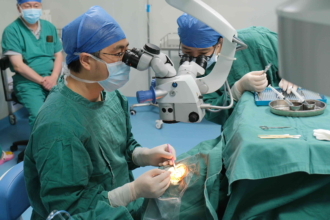
Here is how an ophthalmologist surgically removes cataracts:
- Initial consultation: An ophthalmologist evaluates your eye health.
- Preparation for surgery: On the day of surgery, anesthetic eye drops are used to numb the eye.
- Cataract removal: The surgeon makes a small incision in the eye and uses ultrasound energy to break up and remove the cloudy lens.
- Lens implant: An artificial intraocular lens is inserted in place of the natural lens to restore clear vision.
- Closing the incision: Most incisions are self-sealing and do not require stitches.
- Post-surgery recovery: Protective eyewear and prescription eye drops are provided to prevent infection and reduce inflammation.
Learn More About Glaucoma
Glaucoma is a broad category that connects to several other eye conditions in different ways. These conditions can sometimes develop without any noticeable symptoms, so regular visits to an eye doctor help your provider detect any significant changes in your eye health. To learn more about treatment and management of glaucoma, consult an ophthalmologist near you.