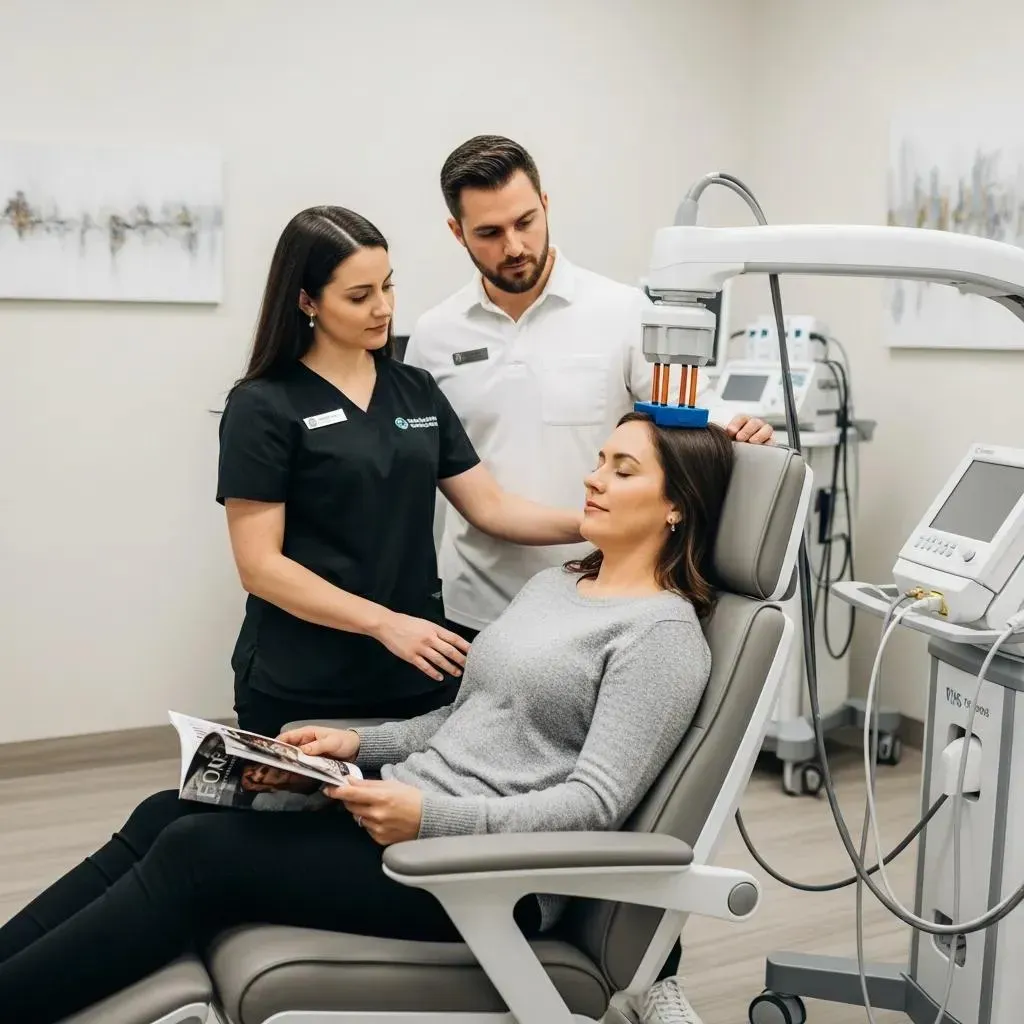

Transcranial magnetic stimulation (TMS) is a noninvasive treatment for depression, and it uses magnetic pulses to stimulate specific areas of the brain. A provider directs these pulses through a coil placed on your scalp. Since medication does not work for everyone, some people look at TMS as an alternative path. Here are two approaches so you understand your options:
Benefits of TMS Therapy
TMS does not require swallowing a daily pill. Sessions take place in an office setting, and you stay awake the whole time. Since the treatment targets specific brain regions, it avoids spreading through your entire body the way oral drugs do.
You typically return to normal activities after each appointment. While medication moves through your bloodstream, TMS works directly on neural tissue. Most people drive themselves home, and they resume work or school the same day.
A typical TMS course follows a set schedule. The sessions are mapped out in advance, and your provider tracks your progress over several weeks. Since the plan is structured, you know what to expect from start to finish.
Benefits of Medication
Antidepressants come in many forms and dosages. A doctor prescribes them based on your symptoms, and you adjust the routine as needed. Since pills travel through the body, they may address symptoms that reach beyond mood alone.
Medication offers flexibility and wide availability. You fill a prescription at most pharmacies, and the time spent may be lower than for other treatments. Since many drug classes exist, a provider has room to switch options if one does not fit.
Major categories that a doctor might discuss include:
- SSRIs, which adjust serotonin levels
- SNRIs, which act on serotonin and norepinephrine
- Antidepressants that are atypical, which use other pathways
Each class has its own dosing schedule. Some people take one pill daily, and others combine medications. Since reactions vary, your provider monitors how you respond over time.
Factors That Apply
Several details shape which path fits your situation. Your medical history matters, and past treatment results guide the decision. Since every case differs, a provider reviews your records before recommending anything.
Insurance coverage plays a role too. TMS typically requires multiple visits, and that schedule affects your time and budget. Since medication may be more accessible, this may steer the choice in one direction.
Points worth reviewing with your provider include:
- Your previous response to antidepressants
- Side effects you experienced before
- Your daily schedule and travel ability
- Current insurance coverage for each option
Side effects differ between the two treatments. Medication may cause nausea, weight changes, or fatigue, and TMS may cause scalp discomfort or mild headaches. Since reactions are individual, you and your provider weigh these factors together.
Schedule TMS Therapy Sessions
TMS and medication take different routes toward managing depression; one targets the brain directly, and the other works through the body. Since both have trade-offs, a conversation with a qualified provider helps you compare them clearly. Bring your questions to the appointment and ask about timing, insurance, and side effects. Contact a psychiatry office today to schedule a TMS consultation and discuss whether it suits your needs.