
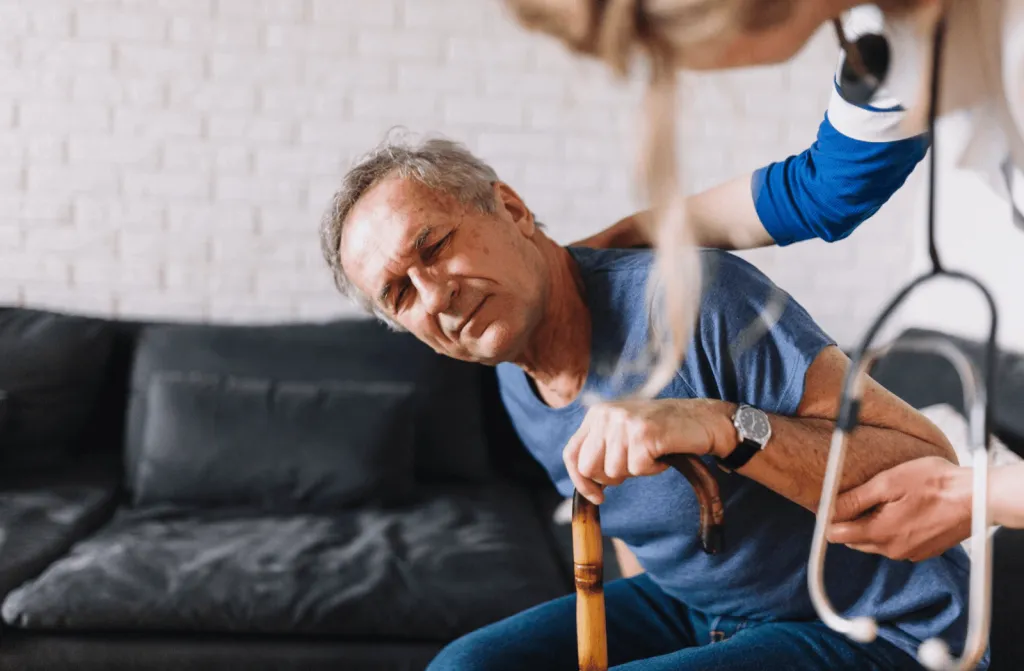

Pain is a common problem for older adults, but it is not a normal part of the aging process. Most nursing facility residents have at least one condition that causes pain, and more than 60% have experienced some amount of it. Ongoing or inadequately treated pain can lead to depression, problems sleeping, appetite changes, falls, and increased functional impairment, so pain management programs use structured assessments and person-centered care plans to address these concerns.
Assessing Pain in Elders
Pain management begins with a comprehensive assessment. Nursing facilities complete assessments on admission, quarterly, and when there is a change in condition; staff re-evaluate pain levels after treatment is given. These assessments provide a structured way to identify pain, while repeated evaluations show whether treatment has addressed the resident’s reported pain.
Facilities use structured, evidence-based tools to assess pain. Many valid tools are available; some are designed for residents with dementia or other cognitive impairments. The assessment process accounts for differences in cognitive abilities; staff use appropriate tools when evaluating residents who have difficulty communicating their pain.
The assessment provides the basis for a person-centered care plan. Each resident’s preferences, goals, and needs guide the plan; treatment follows the assessment findings. Goals should be realistic and measurable, while the care plan should be re-evaluated and updated periodically, especially when there is a change in the pain assessment.
Applying Pain Treatments
Pain medication management is one service provided by pain management practices. Adequate pain control is the goal, and opioid drugs are used only when necessary. Treatment in nursing facilities is based on assessment findings, while management practices also provide interventional services that address specific conditions.
Building Care Plans
Interventional services include several procedures. Spinal injections, joint injections, nerve blocks, radiofrequency ablation, spinal cord stimulation, intrathecal pain pumps, and Botox injections are among the services provided by pain management practices. These procedures differ in their application; providers use them as part of pain treatment services.
Monitoring Pain Outcomes
Pain levels are re-evaluated after treatment is given. The care plan is reviewed periodically; it is updated when the pain assessment changes. Assessment findings remain the basis for treatment decisions, so care plans reflect documented changes in a resident’s condition and keep treatment connected to current findings.
An interdisciplinary and interprofessional team process supports pain management in nursing facilities. The process involves coordination among those involved in pain care; the care plan provides a framework for treatment decisions. Teams review assessment findings; care plans are updated when those findings change, so treatment remains aligned with the resident’s documented needs.
Start a Pain Management Plan
Management for pain for older adults uses comprehensive assessment, person-centered care planning, and periodic re-evaluation. Assessments occur at defined intervals and when a resident’s condition changes; care plans are updated based on assessment findings. Adequate pain control remains the goal, while opioid drugs are used only when necessary and interdisciplinary team processes support ongoing pain care. Start a pain management plan by calling a specialist in your area and booking your first appointment.