
Skin is one of the most important parts of our body because it is the first thing people notice. A clear and healthy-looking skin often boosts confidence, while issues like dark spots and uneven pigmentation can make many people feel uncomfortable. Today, advanced dermatology clinics offer effective treatments for skin pigmentation and dark spots. These clinics use modern methods to help people achieve smoother, brighter, and more even-toned skin.
- What is Skin Pigmentation?
- What Causes Dark Spots and Pigmentation?
- What is a Skin Pigmentation and Dark Spots Treatment Clinic?
- Common Treatments Offered in Clinics
- 1. Laser Treatment
- 2. Chemical Peels
- 3. Microdermabrasion
- 4. Medicated Creams
- 5. Mesotherapy
- 6. PRP (Platelet-Rich Plasma)
- Benefits of Visiting a Clinic
- What to Expect During Treatment
- How Long Does It Take to See Results?
- Tips to Prevent Dark Spots
- Choosing the Right Clinic
- Final Thoughts
- FAQs
In this article, we will explore what skin pigmentation is, why dark spots appear, and how a skin pigmentation and dark spots treatment clinic can help. Everything is explained in simple and easy language so that anyone can understand.
What is Skin Pigmentation?
Skin pigmentation refers to the natural color of your skin. This color is mainly controlled by a pigment called melanin, which is produced by special cells in your skin. When melanin production is normal, your skin tone looks even. But when it becomes uneven or increases in certain areas, it can lead to dark patches, spots, or discoloration.
There are two main types of pigmentation problems:
- Hyperpigmentation: When the skin becomes darker in certain areas due to excess melanin.
- Hypopigmentation: When the skin loses color and becomes lighter in patches.
Most people who visit a clinic usually have hyperpigmentation issues like dark spots, sun spots, or melasma.
What Causes Dark Spots and Pigmentation?
Dark spots can appear for many reasons. Understanding the cause helps in choosing the right treatment. Some common causes include:
1. Sun Exposure
Too much exposure to sunlight is one of the biggest reasons for dark spots. UV rays increase melanin production, leading to sunspots or uneven skin tone.
2. Acne Scars
After acne heals, it often leaves behind dark marks. These marks can stay on the skin for a long time if not treated properly.
3. Hormonal Changes
Hormonal imbalance, especially in women during pregnancy or due to birth control pills, can cause a condition called melasma, which leads to brown patches on the face.
4. Aging
As we grow older, the skin naturally develops age spots due to long-term sun exposure and reduced skin repair ability.
5. Skin Injury or Inflammation
Cuts, burns, or skin irritation can leave dark marks once they heal.
What is a Skin Pigmentation and Dark Spots Treatment Clinic?
A skin pigmentation and dark spots treatment clinic is a specialized dermatology center that focuses on treating uneven skin tone, dark patches, and discoloration. These clinics have trained skin specialists or dermatologists who analyze your skin condition and suggest suitable treatments.
Unlike home remedies, these clinics use medical-grade technology and scientifically proven procedures to deliver faster and more visible results.
Common Treatments Offered in Clinics
A good clinic offers multiple treatment options depending on the severity of pigmentation. Here are some of the most common methods:
1. Laser Treatment
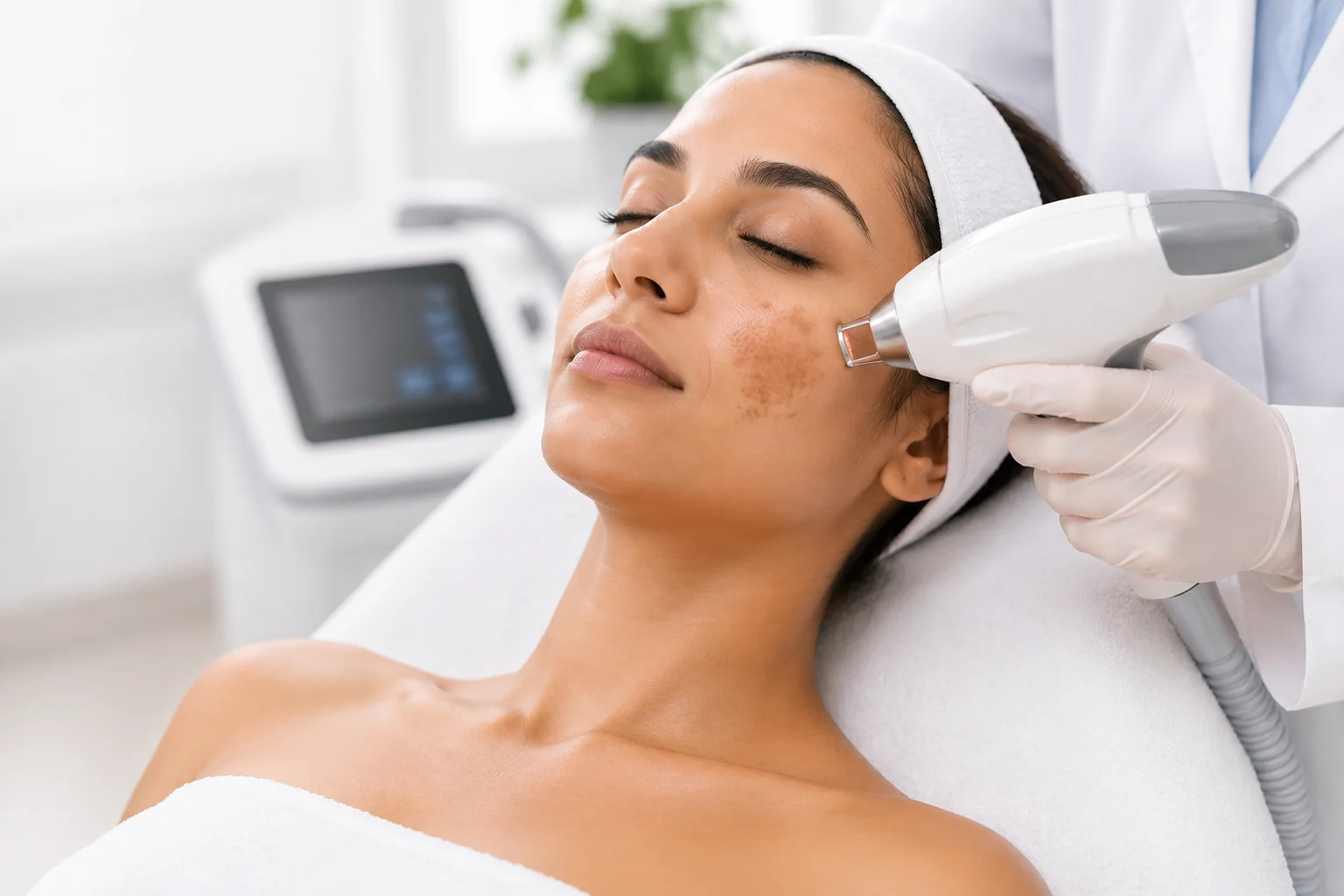
Laser therapy is one of the most popular treatments. It targets dark spots directly and breaks down excess melanin in the skin. Over time, the body naturally removes these pigments, making the skin clearer.
2. Chemical Peels
In this treatment, a special chemical solution is applied to the skin. It removes the top layer of dead skin cells, revealing fresh and even-toned skin underneath. It also helps reduce acne marks and sunspots.
3. Microdermabrasion
This is a gentle exfoliation method where the outer layer of skin is removed using a special device. It improves skin texture and reduces mild pigmentation.
4. Medicated Creams
Doctors may prescribe creams containing ingredients like hydroquinone, retinoids, or vitamin C. These help lighten dark spots gradually.
5. Mesotherapy
In this treatment, vitamins and skin-brightening agents are injected into the skin to improve overall tone and reduce pigmentation.
6. PRP (Platelet-Rich Plasma)
This advanced treatment uses your own blood components to repair damaged skin and promote a healthy glow.
Benefits of Visiting a Clinic
Many people try home remedies, but professional clinics offer better and safer results. Some key benefits include:
- Personalized treatment plans based on skin type
- Faster and more effective results
- Safe procedures performed by experts
- Use of advanced medical equipment
- Long-lasting improvement in skin tone
- Reduced risk of side effects compared to self-treatment
What to Expect During Treatment
When you visit a skin pigmentation clinic, the process usually follows these steps:
Step 1: Skin Analysis
The dermatologist examines your skin and identifies the type of pigmentation.
Step 2: Treatment Plan
Based on your condition, a customized treatment plan is created.
Step 3: Procedure
You undergo the recommended treatment such as laser therapy or chemical peel.
Step 4: Aftercare Guidance
Doctors provide instructions on how to take care of your skin after treatment, including sunscreen use and skincare routines.
How Long Does It Take to See Results?
Results depend on the severity of pigmentation and the type of treatment used. Some people notice improvement after a few sessions, while others may need several weeks or months. Consistency and proper aftercare are very important for the best results.
Tips to Prevent Dark Spots
Even after treatment, prevention is important to avoid new pigmentation. Here are some simple tips:
- Always use sunscreen before going outside
- Avoid direct sunlight during peak hours
- Keep your skin clean and moisturized
- Do not pick or squeeze pimples
- Eat a healthy diet rich in fruits and vegetables
- Drink plenty of water
Choosing the Right Clinic
Not all clinics offer the same quality of care. When selecting a skin pigmentation and dark spots treatment clinic, consider the following:
- Qualified and experienced dermatologists
- Positive patient reviews
- Modern equipment and technology
- Clean and hygienic environment
- Clear explanation of treatment plans and costs
A good clinic will always focus on safety and long-term results instead of quick but risky solutions.
Final Thoughts
Skin pigmentation and dark spots are common problems, but they are treatable with the right care. A professional skin pigmentation and dark spots treatment clinic offers safe, effective, and scientifically proven solutions to improve your skin’s appearance. Whether your issue is caused by sun exposure, acne, or hormonal changes, modern treatments can help restore your natural glow.
The key is to choose the right clinic, follow the treatment plan properly, and take care of your skin every day. With patience and proper care, you can achieve clearer, brighter, and more confident-looking skin.
FAQs
1. Are pigmentation treatments safe for all skin types?
Yes, most treatments are safe, but a dermatologist will first check your skin type to choose the best option for you.
2. How many sessions are needed to remove dark spots?
It depends on the condition of your skin. Some people need 3–5 sessions, while others may need more.
3. Do dark spots come back after treatment?
They can return if you do not protect your skin from sun exposure or follow proper skincare routines.
4. Is laser treatment painful?
Laser treatment may cause slight discomfort, but it is usually tolerable and quick.
5. Can home remedies replace clinic treatments?
Home remedies may help slightly, but clinic treatments are more effective for deep and stubborn pigmentation.